
Leather Seat Cleaning & Conditioning
Fully Insured serving Brooklin, Whitby, and Durham Region
Whitby Auto Interior Detailing
Your leather seats are telling a story, and honestly, it might not be the story you want told.
You’ve experienced coffee spills from the morning Tim Hortons routine on Dundas Street, your favourite jeans creating blue stains on your driver’s seat, and cracking and fading from brutal cold in January. Not to mention parking lot heat baking through your windshield onto your fine leather seats all summer.
Leather is an investment material that demands proper care. When maintained correctly, it stays soft and luxurious for years, but if it remains untreated, then it becomes dry, cracked, faded, and uncomfortable. Those features hurt the appearance and resale value of your vehicle.
Leather needs regular conditioning just like your skin needs moisturizer. Ontario’s climate is particularly harsh on automotive leather with Winter heating systems drying it out. Summer UV rays also fade the colour and break down the protective coating. Lastly, our freeze-thaw cycles cause the material to contract and expand, leading to premature cracking.
At Brooklin Mobile Detailing, we bring professional leather cleaning and conditioning directly to your location throughout Durham Region. We’re offering deep cleaning that removes embedded dirt and oils, stain removal that handles even stubborn discolouration, and leather conditioning that restores softness and prevents cracking for long term health.
This isn’t wiping your seats with Armour All and calling it a day. This is proper leather care using pH-balanced cleaners, premium conditioners, and techniques that protect and preserve your interior investment.

Professional Leather Care for Durham Region Vehicles
What most people think is leather cleaning can be done with simple soap and water along with a quick wipe. That’s unfortunately very wrong.
Leather is a natural material that requires a planned approach. That includes cleaning to remove contaminants, conditioning to restore moisture and flexibility, then protection to guard against future damage. Skip any step and you’re setting yourself up for problems down the road.
Durham Region’s weather is particularly challenging for automotive leather. Our winters are cold enough that heated seats run constantly, which accelerates moisture loss. Our summers are hot enough that parked vehicles become ovens, baking UV rays into your seats and causing fading. Spring brings mud and debris that gets ground into the grain. Fall delivers leaves and moisture that can cause mildew issues.
Professional leather care addresses all of these challenges by starting with checklist inspection to identify the leather type, condition, and any problem areas that need special attention. The cleaning phase removes surface dirt, body oils, sweat, and contaminants that have built up in the leather’s grain and pores. We use pH-balanced cleaners specifically formulated for automotive leather that lift dirt without stripping natural oils or damaging protective coatings.
Conditioning follows cleaning because you can’t properly condition dirty leather because that would simply seal in the contaminants. Quality leather conditioners replace lost moisture, restore flexibility, and create a protective barrier against UV rays and environmental damage. This step is what keeps leather soft and supple instead of becoming stiff and prone to cracking.
The difference between professional leather care and DIY attempts is dramatic. Most consumer products are either too aggressive and strip the leather, or too weak and don’t actually clean anything. Proper technique along with planned product application deliver results that protect your investment and maintain that luxury feel.


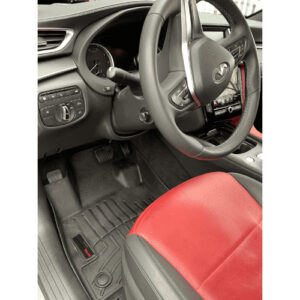
Stain Removal & Deep Cleaning
Leather stains are frustrating because they seem to appear from nowhere and refuse to come out with normal cleaning.
Denim transfer is one of the most common issues we see, especially on light-coloured leather. The dye from your jeans gradually transfers to the seat through body heat and friction, creating blue or dark discolouration. This is a dye that’s penetrated into the leather’s finish.
Ink stains from pens in pockets, food and beverage spills, body oils and sweat—these substances can stain and create permanent issues if not addressed properly. Body oils and sweat transfer from your skin constantly, building up in contact areas like the driver’s seat, steering wheel, and door armrests. Over time, this buildup causes darkening and breakdown of the leather’s protective coating.
Our deep cleaning process works the cleaner into the leather’s grain using appropriate brushes that lift embedded dirt without damaging the surface. For stubborn stains, we have targeted treatments that break down specific types of leather care.
After a deep cleaning detail, most clients are shocked at the difference. Seats they thought were “gray” are actually light tan once the accumulated grime is removed. Areas they assumed were permanently stained are restored to showroom appearance. The leather looks cleaner, feels softer, and smells fresh instead of carrying that musty odor that develops when dirt and oils build up.
Conditioning to Prevent Cracking
Leather cracking is permanent damage that happens when the material loses too much moisture and flexibility. Once leather cracks, you can’t reverse it and can only prevent it from getting worse.
This is why conditioning is absolutely critical as our climate actively works against leather maintenance. The convenience of heated seats in winter, baking heat in summer, and temperature swings between seasons all pull moisture from leather and cause it to become dry and brittle.
Quality leather conditioner works by penetrating the material and replacing lost oils and moisture. This restores the leather’s natural suppleness and creates resistance to cracking from stress and movement. Seats flex constantly as you get in and out, adjust positions, and move around while driving. Without proper conditioning, this repetitive flexing causes dry leather to crack along stress points.
We focus extra attention on well used, high traffic areas that crack first like seat bolsters where you slide in and out, the driver’s seat cushion that supports your weight, and armrests that see constant contact. These areas need thorough conditioning to maintain flexibility and resist damage.
For leather that’s starting to show early signs of dryness, conditioning can reverse the damage before it becomes permanent. For leather already showing fine cracks, conditioning won’t fix them but will prevent them from spreading and worsening.
Regular conditioning schedules make a massive difference in leather longevity. We typically recommend conditioning every 3-4 months for vehicles in regular use, which aligns with seasonal changes that impact leather condition.
Leather vs Vinyl
Not all interior materials are created equal, and using the wrong products or techniques can cause damage instead of improvement.
Many vehicles marketed as having “leather” interiors actually have vinyl or synthetic leather on certain surfaces. Door panels, dashboard sections, and lower seat areas often use vinyl even when seat surfaces are genuine leather. This matters because the care requirements are different.
Genuine leather is animal hide that’s been treated and dyed. It’s porous, breathes naturally, and requires conditioning to maintain moisture and flexibility. Vinyl and synthetic leather are plastic-based materials designed to mimic leather’s appearance. They don’t breathe, don’t require conditioning in the same way, and can actually be damaged by some leather conditioners.
We identify material types during inspection and use appropriate products and techniques for each. Genuine leather gets pH-balanced cleaners and moisturizing conditioners. Vinyl gets cleaners formulated for synthetic materials and protectants that maintain flexibility without leaving residue.
Using leather conditioner on vinyl will create problems as the product sits on the surface, making it greasy and slippery, and attracts dust. Using harsh cleaners on genuine leather strips natural oils and accelerates deterioration.
Maintaining Luxury Interior Seats
Leather interiors are a premium feature that adds real value to your vehicle, but only if they’re properly maintained. Neglected leather looks cheap and dated while maintained leather looks expensive and feels amazing.
The key to keeping leather in excellent condition is consistent maintenance rather than waiting until problems develop. For Durham Region vehicles, it’s recommended for professional leather care service quarterly so it aligns with seasonal changes. Spring cleaning addresses winter salt and grime, then Summer preparation includes extra UV protection. Fall maintenance removes summer wear and Winter preparation focuses on conditioning before heating systems dry everything out.
Between professional services, simple maintenance makes a big difference. Wipe up spills immediately before they set. Use microfiber towels for quick cleaning. Park in shade when possible to reduce UV exposure.
For luxury vehicles where interior condition directly impacts value, professional leather care is an investment that pays returns. A BMW 5-Series with pristine leather commands thousands more in resale than the same model with cracked, faded seats. The cost of regular professional care is a fraction of the value lost to leather deterioration.
The mobile aspect of our service makes maintenance convenient for busy professionals and families. We come to your home, office, or anywhere in Whitby, Oshawa, Ajax, Courtice, Brooklin, Bowmanville ON, or Durham Region while you go about your day.